























Infrared vs Induction Cooktop
Published on 2026-03-15
Infrared vs Induction
Cooktop
A friendly, bilingual guide to choosing the best gas alternative cooktop for your Nepali home
Overview
Why This Matters for Nepal
With LPG gas prices soaring and supply disruptions becoming routine across Nepal, thousands of households are turning to electric cooktops. The two most popular choices — Infrared and Induction — look alike on the outside but work in completely different ways. This guide explains everything you need to know so you can choose the right one for your kitchen, your cookware, and your budget.
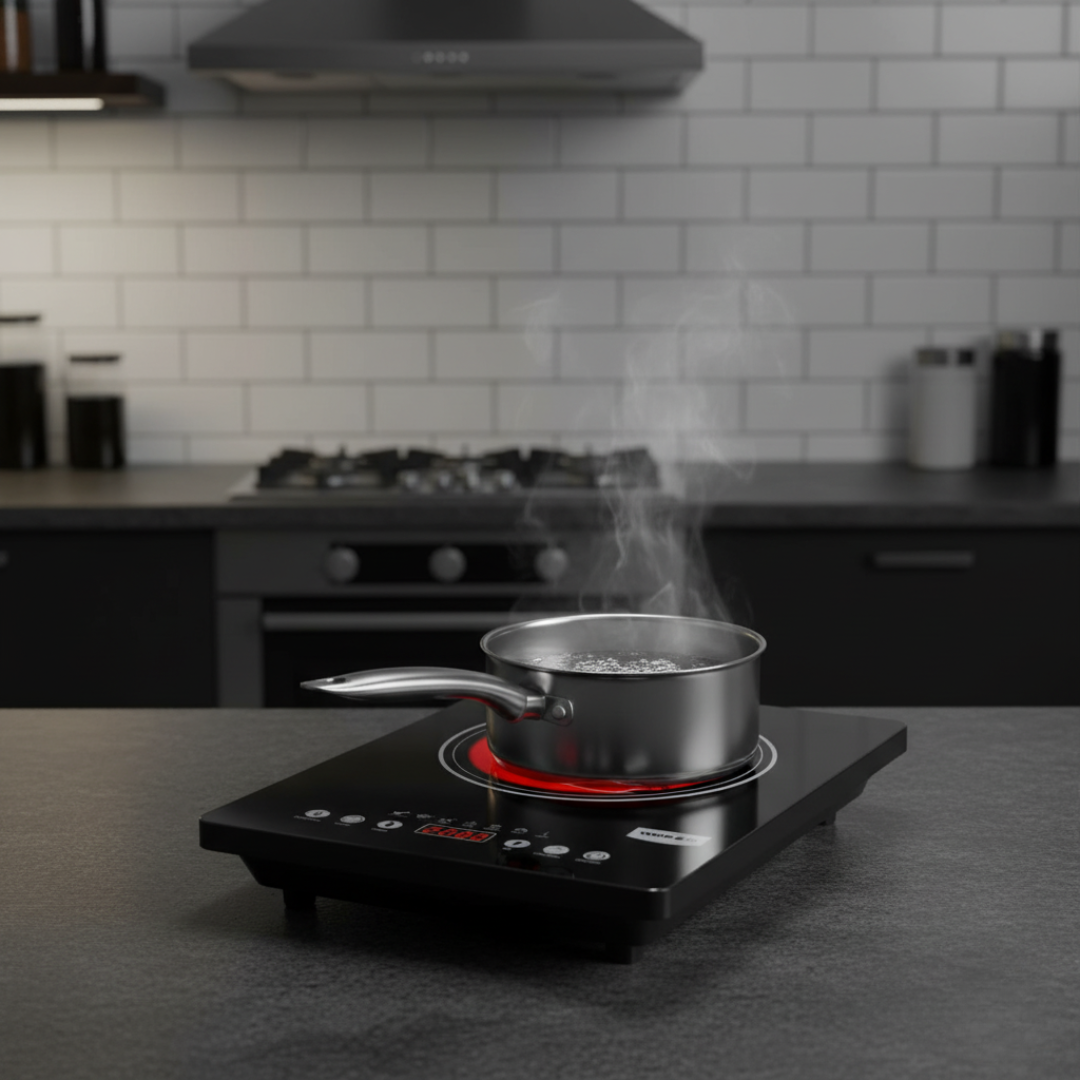
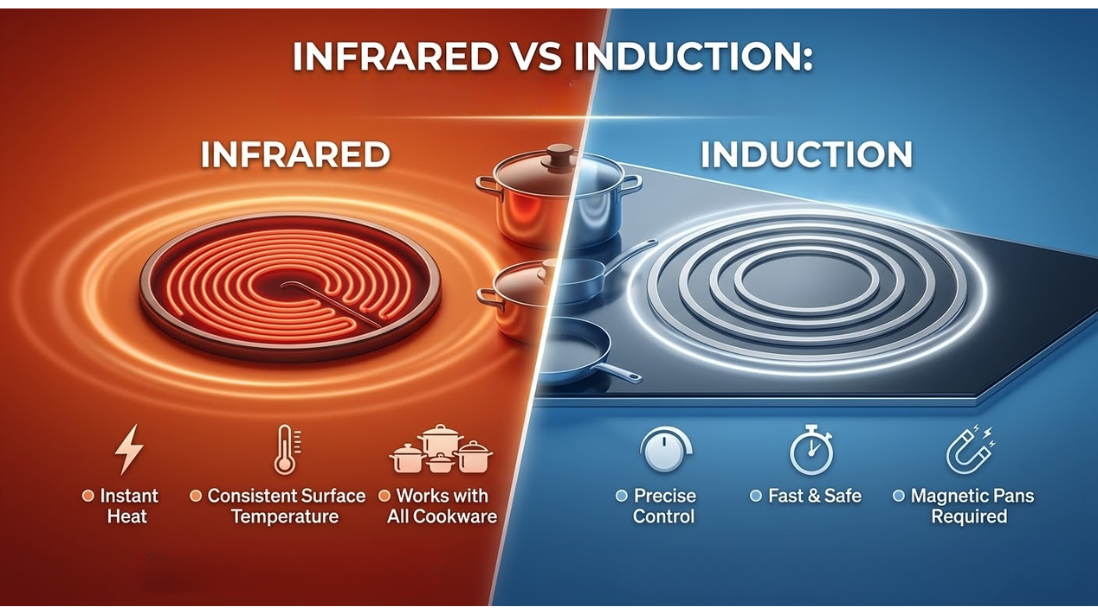
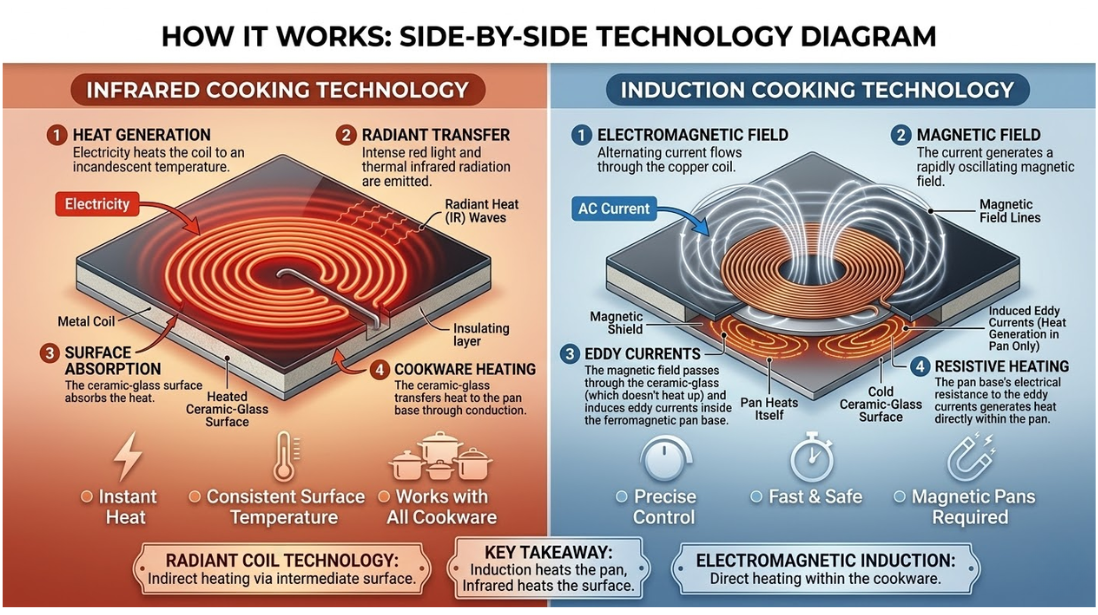
Uses a nichrome or halogen element beneath a glass-ceramic surface. When electricity flows, it glows red-hot and emits infrared radiation that heats any cookware placed on top — just like sunlight warming your skin. The surface itself also gets hot.
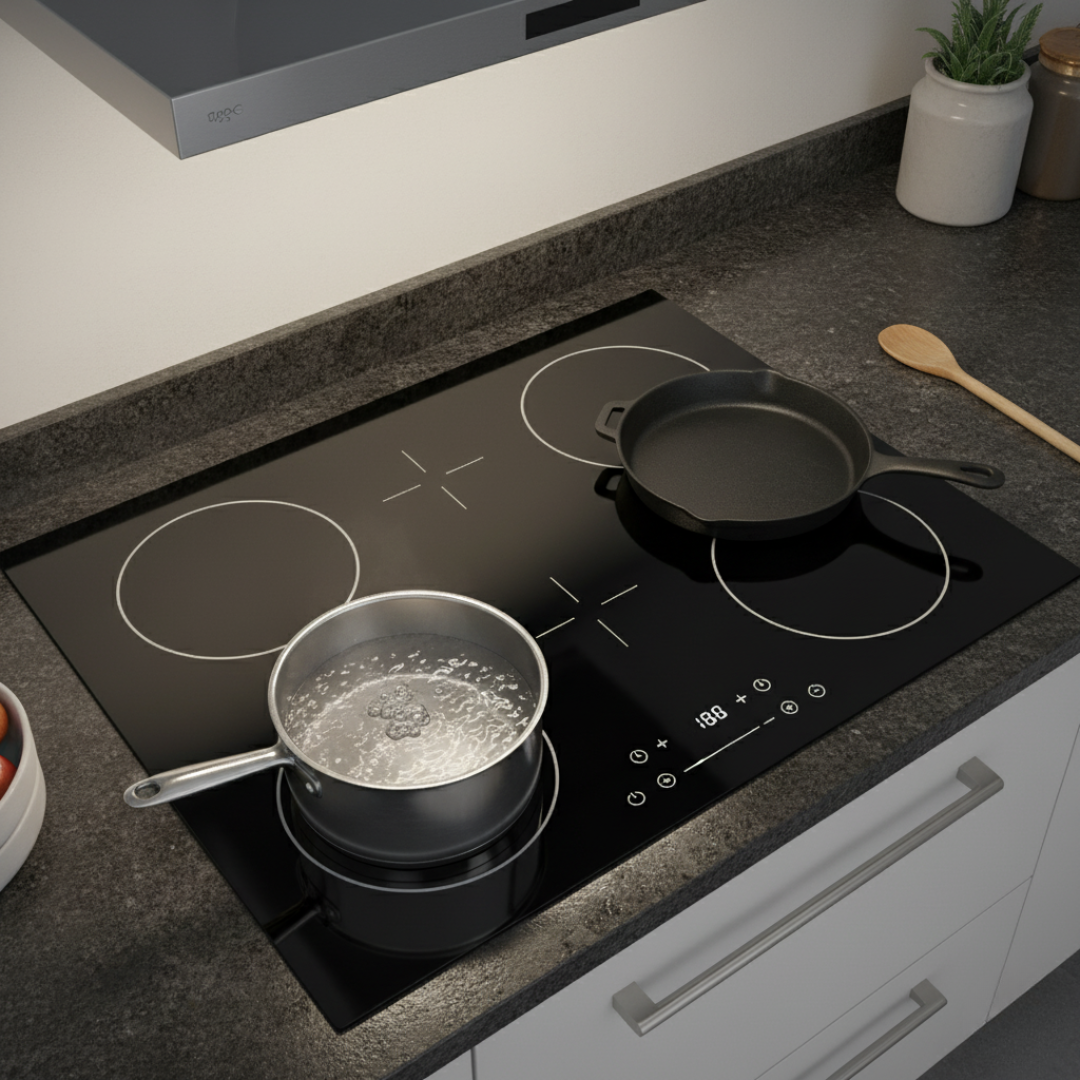
Uses a copper coil under the surface to create an alternating magnetic field. This induces eddy currents inside ferromagnetic cookware (iron/steel), heating the pot directly — the cooktop surface stays completely cool to the touch.
The Science
How Each One Works
Pros & Cons
Infrared Cooktop
Induction Cooktop
Quick Numbers
At a Glance
Full Comparison
Feature-by-Feature Breakdown
| Feature | 🔴 Infrared | 🟢 Induction |
|---|---|---|
| Working Principle | Infrared radiation | Electromagnetic induction |
| Heating Speed | Moderate (5–7 min/L) | Fast (3–4 min/L) Winner |
| Energy Efficiency | ~70–75% | ~85–90% Winner |
| Surface After Use | Stays hot — caution | Stays cool Safer |
| Cookware Compat. | All materials Winner | Magnetic only |
| Price (Nepal) | NPR 3k–7k Cheaper | NPR 5k–15k |
| Temp. Control | Basic knob / digital | Precise digital + timer Winner |
| Cleaning | Easy | Very easy Winner |
| Child Safety | Moderate | High Winner |
| Spare Parts Nepal | Widely available Winner | Limited in small towns |
| Best For | Traditional / rural homes | Modern / urban homes |
Recommendations
Which Cooktop Suits You?
1. What is the main difference between an infrared cooktop and an induction cooktop?
The main difference is the heating technology. Induction cooktops use electromagnetic energy to heat the cookware directly, while infrared cooktops use radiant heat from an electric heating element beneath a glass surface to heat the pan.
2. Which cooktop heats faster: infrared or induction?
Induction cooktops generally heat faster because the heat is generated directly inside the cookware. Infrared cooktops first heat the element and glass surface before transferring heat to the pan.
3. Do infrared cooktops require special utensils?
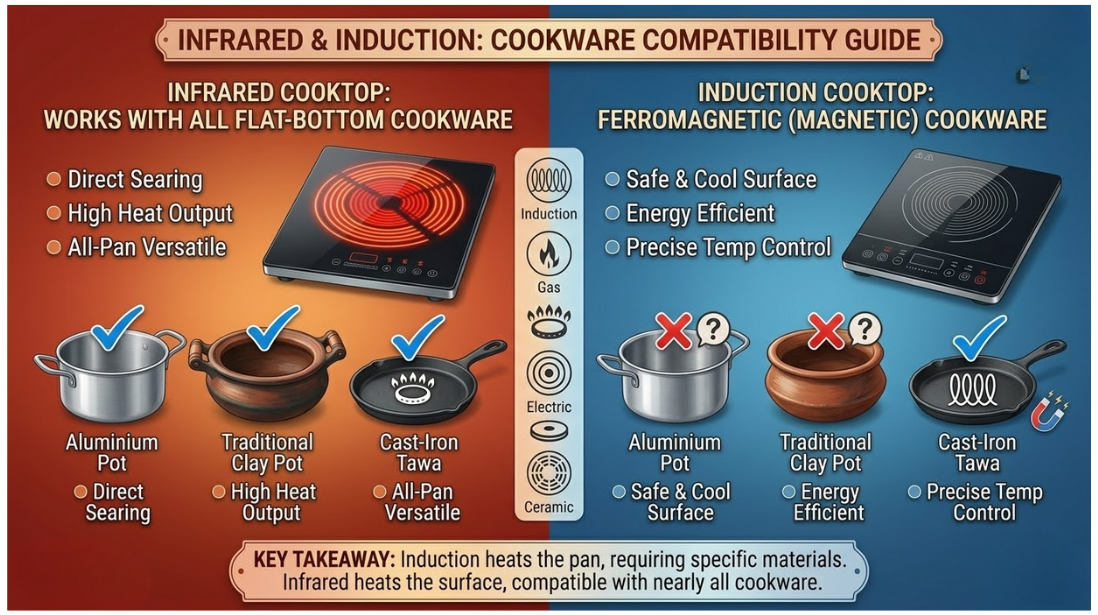
No. Infrared cooktops work with almost all types of flat-bottom cookware such as stainless steel, aluminum, glass, or ceramic. Induction cooktops, however, require magnetic cookware like cast iron or induction-compatible stainless steel.
4. Which cooktop is more energy efficient?
Induction cooktops are more energy-efficient because they transfer heat directly to the cookware, reducing heat loss. Infrared cooktops lose some heat through the glass surface and surrounding air.
5. Is induction cooking safer than infrared cooking?
Yes, induction cooktops are generally considered safer because the cooktop surface stays relatively cooler and only heats when compatible cookware is placed on it. Infrared cooktops become very hot and remain hot for some time after cooking.
6. Which cooktop consumes less electricity?
Induction cooktops typically consume less electricity because they heat the pan directly with minimal heat loss. Infrared cooktops may use slightly more power since they heat the surface and surrounding air.
7. Can I cook roti or use a tawa on an induction cooktop?
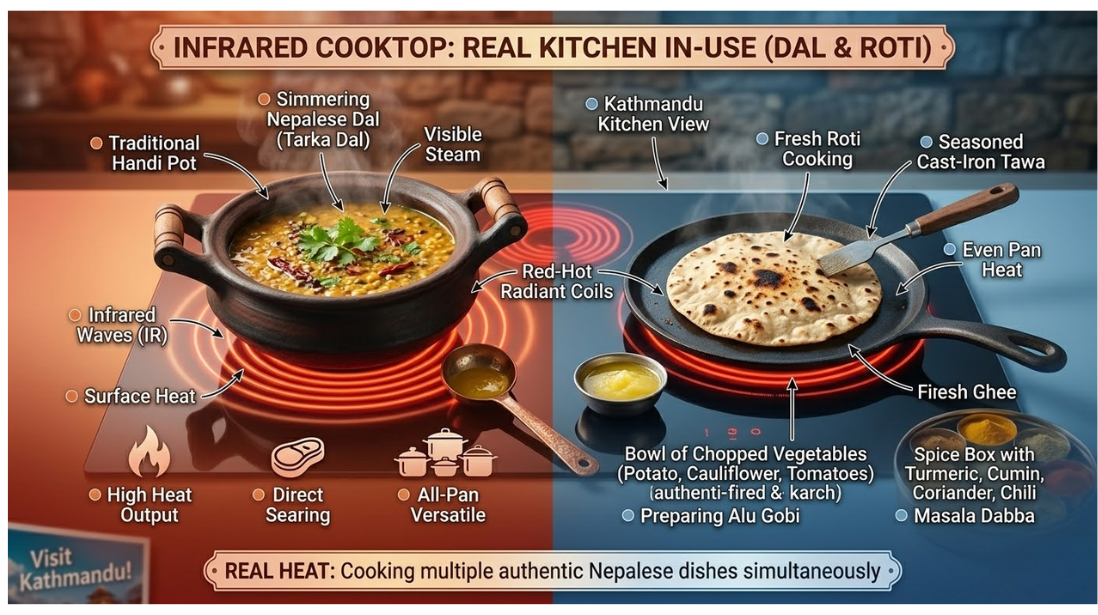
You can cook roti on induction only if the tawa is induction-compatible (magnetic). Infrared cooktops are more flexible and allow you to use almost any type of tawa.
8. Which cooktop is better for daily home cooking?
If you want faster cooking, better energy efficiency, and safety, an induction cooktop is usually the better choice. However, if you want to use all types of cookware without changing utensils, an infrared cooktop can be more convenient.
9. Are infrared cooktops cheaper than induction cooktops?
Yes, infrared cooktops are usually more affordable compared to induction cooktops, which may cost more due to advanced electromagnetic technology.
10. Which cooktop is best during LPG gas shortage?
Both infrared and induction cooktops are good alternatives to LPG gas. Induction cooktops are more efficient, while infrared cooktops are more flexible with cookware.
For Nepal's ongoing gas shortage, both cooktops are excellent alternatives to LPG — but your situation picks the winner. On a tight budget with traditional cookware? The Infrared cooktop is the most accessible, affordable cooktop in Nepal with zero extra investment needed. Ready to invest more for long-term savings, a cooler kitchen, and better child safety? The Induction cooktop is the smarter long-term choice. Either way, you're upgrading to something cleaner, safer, and far more reliable than LPG gas.
Popular Brands in Nepal — Infrared / Induction: Baltra, Yasuda, Midea, Faber, CG, Elica, Kent and others
Available at ACGHAR.COM — Kathmandu, Nepal
परिचय
नेपालमा यो किन महत्त्वपूर्ण छ?
ग्यासको मूल्य बढ्दो र आपूर्ति अनिश्चित भएकाले नेपालभरि हजारौँ घरपरिवार इलेक्ट्रिक चुल्होतर्फ आकर्षित हुँदैछन्। Infrared र Induction — यी दुई लोकप्रिय विकल्प बाहिरबाट उस्तै देखिए पनि भित्रबाट एकदमै फरक तरिकाले काम गर्छन्। यो गाइडले तपाईंलाई आफ्नो भाँडा, घर र बजेटको लागि सबैभन्दा उचित निर्णय गर्न सम्पूर्ण जानकारी दिनेछ।
यसमा काँचको सतहमुनि nichrome वा halogen heating element हुन्छ। बिजुली आउँदा यो रातो-नारङ्गी रङमा चम्किन्छ र अवरक्त विकिरण निकाल्छ जसले भाँडालाई तताउँछ। सतह पनि तातो हुन्छ।
यसमा सतहमुनि copper coil ले चुम्बकीय क्षेत्र उत्पन्न गर्छ। यो क्षेत्रले फलाम वा स्टिलका भाँडामा eddy current बनाएर भाँडालाई आफैंले तताउँछ। Cooktop को सतह चिसो नै रहन्छ।
वैज्ञानिक सिद्धान्त
दुवै कसरी काम गर्छन्?
फाइदा र बेफाइदा
Infrared Cooktop
Induction Cooktop
द्रुत तथ्याङ्क
एक नजरमा
विस्तृत तुलना
पूर्ण विशेषता तुलना
| विशेषता | 🔴 Infrared | 🟢 Induction |
|---|---|---|
| काम गर्ने तरिका | अवरक्त विकिरण | विद्युत्-चुम्बकीय प्रेरण |
| तताउने गति | मध्यम (५–७ मि./लि.) | छिटो (३–४ मि./लि.) विजेता |
| ऊर्जा दक्षता | ~७०–७५% | ~८५–९०% विजेता |
| प्रयोगपछि सतह | तातो — सावधान | चिसो रहन्छ सुरक्षित |
| भाँडाको अनुकूलता | सबै सामग्री विजेता | चुम्बकीय मात्र |
| मूल्य (नेपाल) | रु. ३k–७k सस्तो | रु. ५k–१५k |
| तापमान नियन्त्रण | साधारण knob/digital | सटीक digital + timer विजेता |
| सफाइ | सजिलो | धेरै सजिलो विजेता |
| बच्चाहरूको सुरक्षा | मध्यम | उच्च विजेता |
| स्पेयर पार्ट्स | सहजै उपलब्ध विजेता | सानो सहरमा सीमित |
| उपयुक्त | परम्परागत / ग्रामीण | आधुनिक / शहरी |
सुझाव
कसको लागि कुन उपयुक्त?
नेपालको ग्यास अभावको समयमा दुवै विकल्प उत्कृष्ट छन् — तर तपाईंको परिस्थितिले निर्णय गर्छ। सीमित बजेट र परम्परागत भाँडाहरू भएको घरको लागि Infrared Cooktop नेपालमा सबैभन्दा सुलभ र किफायती विकल्प हो। तर दीर्घकालीन बिजुली बचत, सुरक्षित र आधुनिक सुविधा चाहनुहुन्छ भने Induction Cooktop बुद्धिमानीपूर्ण लगानी हो। जुनसुकै छान्नुस् — ग्यासभन्दा सफा, सुरक्षित र भरपर्दो हुनेछ।
नेपालमा लोकप्रिय ब्रान्डहरू — Baltra, Yasuda, Midea, Faber, CG, Elica, Kent र अन्य
सम्पर्क गर्नुहोस्: www.acghar.com